

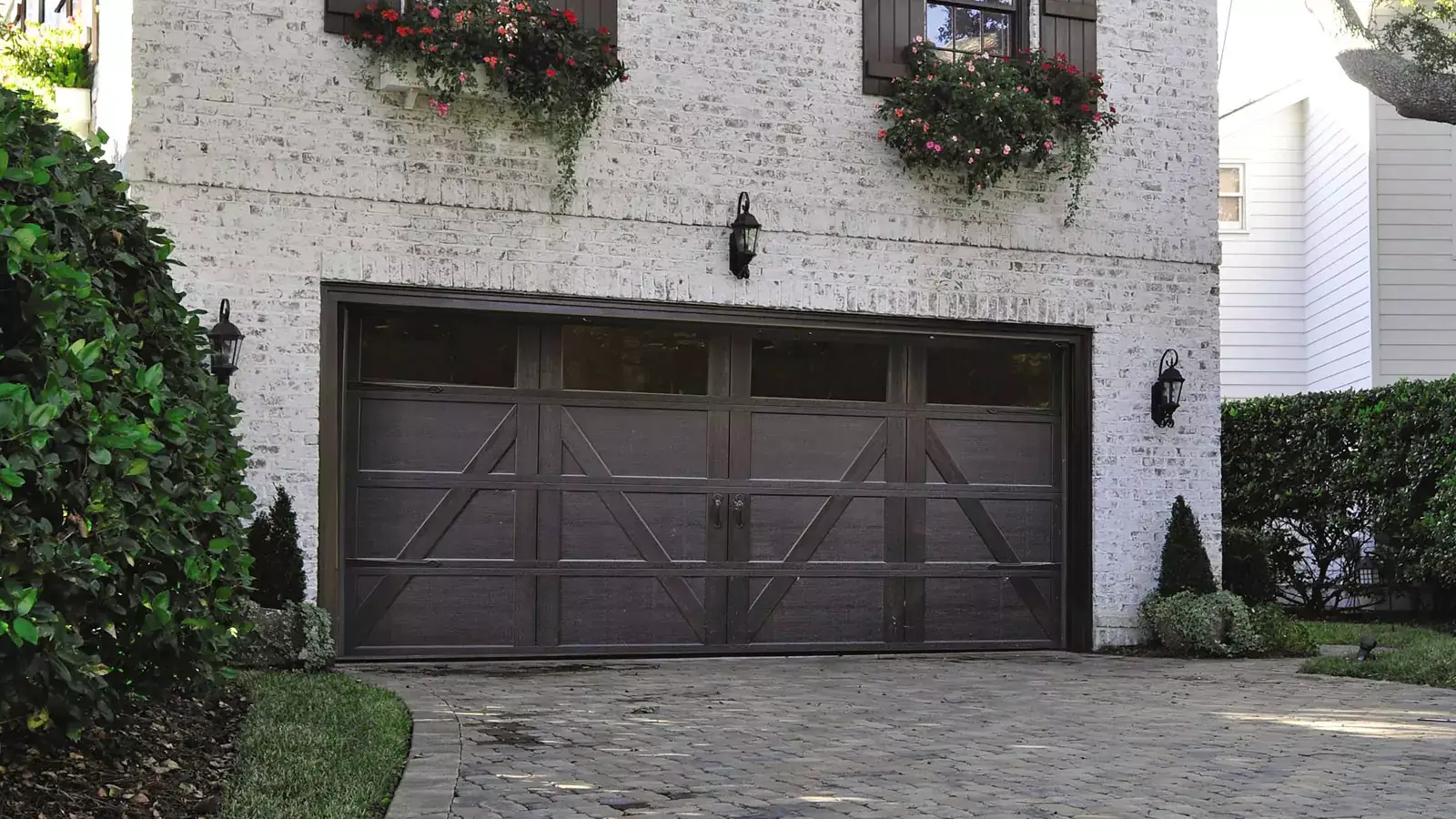
A residential garage door installation begins with a professional assessment of the existing opening and track system. The process typically takes one day, with the old door removed and the new unit securely installed. Overhead Door Company of Santa Rosa, Inc.™ provides garage door installation, repair, and openers for homes and businesses in Santa Rosa and nearby areas.
Key Takeaways
-
A professional installation begins with assessing the existing opening and track system.
-
The process typically takes one day, with the old door removed and the new unit installed.
-
Homeowners who skip professional installation risk alignment, spring tension, and sensor failures.
-
Proper preparation includes clearing six feet of floor space along the walls for track mounting.
What happens during a residential garage door installation?
A residential garage door installation transforms a home’s security, energy efficiency, and curb appeal. The process follows a structured sequence of precise steps handled by certified professionals.
Homeowners who skip professional installation risk improper alignment, spring tension failures, and safety sensor malfunctions. These errors compromise family safety and shorten the door’s service life. The company has delivered dependable residential and commercial garage door solutions for decades.
What preparation happens before installation day?
Technicians begin with careful planning and precise measurements of the opening. The existing door and track system undergo a full assessment. This step catches structural issues that would undermine a new installation. A Residential Garage Door Installation Guide from the company outlines what clients should clear from the garage interior before the crew arrives.
How does the installation unfold step by step?
-
Remove the old door and hardware. Technicians disassemble panels, tracks, springs, and the opener while protecting the surrounding structure.
-
Inspect and prepare the opening. The rough opening receives a detailed check for level, plumb, and structural integrity.
-
Assemble the new door sections. Panels are connected and reinforced according to manufacturer specifications.
-
Install tracks and spring system. Precision mounting ensures smooth travel and balanced weight distribution.
-
Mount the door and attach hardware. The assembled door is lifted into position and secured to the track system.
-
Install the opener and safety sensors. Wiring, sensors, and the motor unit are configured and tested.
-
Test and adjust. Technicians cycle the door multiple times, fine-tuning balance, force settings, and auto-reverse sensitivity.
Expert handling of mechanical components prevents premature wear. A properly installed door improves energy efficiency, boosts security, and adds serious curb appeal. HomeAdvisor reports homeowners see up to an 85% return on investment from a new garage door.
What happens after the door is installed?
The crew performs a final safety demonstration and reviews maintenance basics. All debris and old materials are removed from the property. Clients receive documentation covering warranty terms and service contacts. For a deeper look at the full process, the company’s professional garage door installation services page details every phase from measurement to final walkthrough.
How do you prepare your home for installation day?
Proper preparation prevents delays and protects property during a Residential Garage Door Installation Guide project. Homeowners who clear the workspace and secure the surrounding area help the installation team work efficiently from the moment they arrive. Skipping these steps risks damage to vehicles, stored items, or the new door itself.
What should be cleared from the garage before the crew arrives?
The installation team needs unobstructed access to the entire garage interior. Remove vehicles from the garage and park them well away from the driveway. Clear a minimum of six feet of floor space along the walls where the tracks will mount. Relocate bicycles, tools, storage bins, and shelving units that sit near the door opening. Knowing what to expect helps homeowners prepare the home, communicate effectively with the installer, and feel confident in the results.
How much space do installers need to work safely?
A generous work zone keeps the process moving and reduces safety hazards. The crew requires room to lay out sectional panels, rails, and hardware across the driveway or garage floor. Standard single doors measure 7 ft. high by 8 or 9 ft. wide, while standard double doors span 7 ft. high by 16 ft. wide. Double doors are so large that few home centers and only some garage door stores keep them in stock, so expect to order one instead of buying it off the shelf. Secure pets indoors and inform household members to avoid the garage entry points throughout the day.
Overhead Door Company of Santa Rosa serves homeowners across Napa County, Lake County, Mendocino County, Marin County, and Sonoma County. The company also provides garage door opener installation for clients upgrading their entire system. Disconnecting the existing opener and removing wall-mounted controls before the appointment saves time. Cover nearby stored items with drop cloths to shield them from dust and debris generated during track removal and mounting.
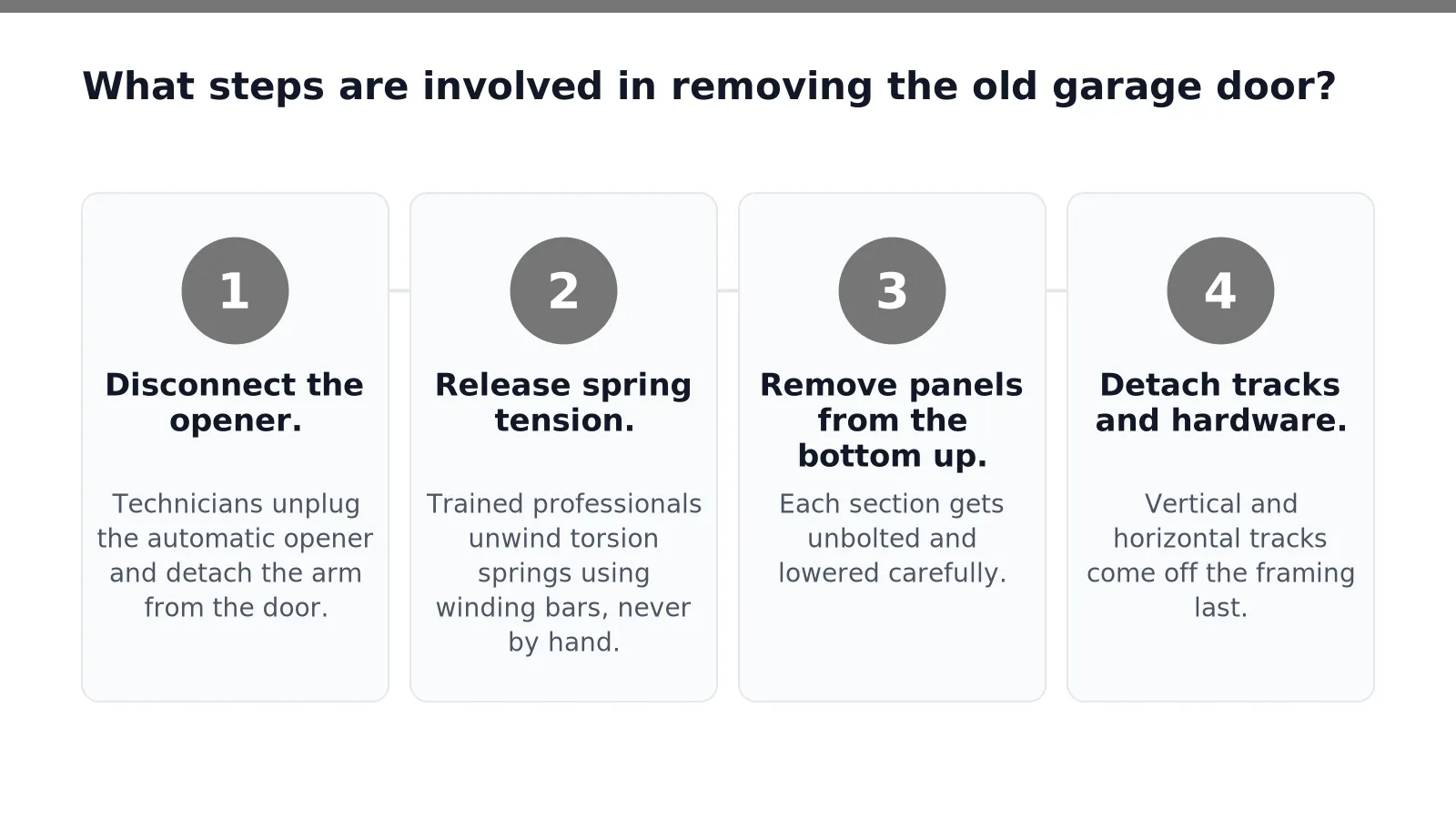
What steps are involved in removing the old garage door?
Removing an old garage door requires careful disassembly of the door panels, tracks, springs, and hardware before any new installation begins. This phase carries the highest risk of injury because garage doors can weigh up to 400 pounds, according to Clopay Garage Door Installation. Homeowners who attempt this work without proper training face serious safety hazards from tension-loaded springs and falling panels.
How long does old garage door removal take?
A complete DIY garage door install typically takes 8 to 10 hours, per Clopay Garage Door Installation. Professional technicians complete removal and replacement far more efficiently. Overhead Door Company of Santa Rosa brings decades of team experience to every job, ensuring the work is done right the first time.
The removal sequence follows a strict order:
-
Disconnect the opener. Technicians unplug the automatic opener and detach the arm from the door.
-
Release spring tension. Trained professionals unwind torsion springs using winding bars, never by hand.
-
Remove panels from the bottom up. Each section gets unbolted and lowered carefully.
-
Detach tracks and hardware. Vertical and horizontal tracks come off the framing last.
Why should homeowners avoid removing the door themselves?
Spring tension release is the most dangerous step in the entire process. A single mistake causes severe injury or property damage. The company’s technicians handle this work daily with certified methods and proper tools. From the initial consultation to the final safety checks, each step ensures the new door operates smoothly and lasts for years to come.
How do technicians assemble and install the new door?
Technicians follow a structured installation sequence from planning to completion. The process transforms a garage opening into a fully operational entry point with precise alignment and safety verification.
What preparation happens before assembly begins?
Installers first verify the rough opening dimensions match the door specifications. All track components, panels, springs, and hardware undergo inspection for damage. The work area clears of obstructions, and tools stage within reach. A standard single door weighs up to 400 pounds, so a crew of two or three technicians handles the lift safely.
How do the panels and tracks come together?
-
Assemble the bottom section first, inserting weatherstripping along the lower edge.
-
Attach hinges and brackets to each panel according to the manufacturer’s layout.
-
Mount the vertical tracks on both sides of the opening, checking plumb with a level.
-
Stack successive panels one at a time, securing hinges between each section.
-
Install horizontal tracks and connect them to the vertical tracks with radius brackets.
-
Position the spring assembly above the opening and tension it to counterbalance the door weight.
For fiberglass doors, technicians handle panels with an artfully molded wood-grain surface that conceals durable steel construction. The finish resists weathering while delivering the look of natural wood.
What special steps apply to aluminum and glass doors?
Aluminum garage door model 9920 features a wide, heavy-duty frame and joint seals between sections for additional weather resistance. Installers press these seals firmly into place during panel stacking. Wind load options add protection from high-wind speeds, requiring reinforced track brackets and additional fasteners at specified intervals. The model accommodates openings up to 26 feet wide with custom frame finishes.
After all panels hang, technicians install the opener bracket, attach the drive mechanism, and run the door through multiple cycles. Limit switches adjust until the door opens and closes smoothly without binding.
What safety tests and final checks are performed?
Final safety checks confirm the new door operates smoothly and delivers lasting performance. Technicians complete a systematic inspection before considering any installation finished.
What does the balance and alignment test involve?
The door must travel evenly through its tracks without binding or hesitation. Technicians disconnect the opener and manually lift the door. It should stay open at waist height without drifting up or down. Any movement signals improper spring tension. Correcting this imbalance prevents premature wear on rollers, cables, and the opener motor.
How are safety reversal systems verified?
-
Photo-eye sensor test: The technician blocks the invisible beam near the floor with an object. The closing door must reverse immediately without contacting the obstruction.
-
Mechanical auto-reverse test: A 2×4 board is placed flat under the door’s path. The door must reverse within two seconds of touching the wood. This test confirms the opener’s pressure sensitivity meets current safety standards.
-
Force setting adjustment: The technician fine-tunes the opener’s force limits. Excessive force creates a safety hazard. Insufficient force causes nuisance reversals.
How is the keypad and access system programmed?
Proper keypad programming supports security and prevents malfunctions. Overhead Door Company of Santa Rosa provides clear, step-by-step instructions for a wide range of keypad models. Technicians set a unique PIN, test the code multiple times, and confirm the signal reaches the opener reliably. A properly configured system supports smooth operation and long-lasting functionality for every property.
The final walkthrough covers lubrication points, weather seal contact, and noise levels during operation. Homeowners receive guidance on maintenance intervals. Every residential garage door installation guide standard demands these checks. Skipping them risks safety sensor failures and spring imbalances that shorten door lifespan. Professional verification after a residential garage door installation protects the investment and ensures the door operates safely from day one.
FAQ
What happens if I skip professional installation?
Homeowners risk improper alignment, spring tension failures, and safety sensor malfunctions, compromising family safety and shortening the door’s service life.
How should I prepare my garage before installation day?
Clear six feet of floor space along the walls for track mounting, as outlined in the company’s Residential Garage Door Installation Guide.
Conclusion
A professional installation transforms a complex, high-tension job into a single day of reliable work. Homeowners who choose certified technicians avoid the risks of spring failure and misalignment, securing a door that operates safely from the first cycle. The final walkthrough confirms every safety system functions correctly, protecting the investment and providing lasting peace of mind. Call Overhead Door Company of Santa Rosa to schedule a residential garage door installation and get expert guidance on what to expect every step of the way.